

Employer advice


This tool estimates how much time you’ll realistically need to manage a marketing apprentice and highlights whether your setup is strong, workable, or likely to cause issues.

Wondering what you should pay your marketing apprentice? Why not get a rough idea with our apprentice salary calculator?

Interested in how much your business could save by hiring a marketing apprentice as opposed to a graduate? Check out this handy calculator!

Upskilling existing staff through marketing apprenticeships builds real capability, boosts retention, and improves output—without the cost and risk of hiring, while turning current employees into confident, multi-skilled marketers.

Wondering whether your junior marketing vacancy could be filled with an apprentice? Check out this handy assessment tool to find out.

A practical breakdown of how long it takes for a marketing apprentice to become useful, what they can do at each stage, and how to speed it up.

A clear breakdown of what marketing apprentices actually do day-to-day, how their role evolves over time, and how they build real capacity within your marketing team.

A straight answer to what happens if a marketing apprentice doesn’t work out, including common issues, when to step in, and how to handle it properly without being stuck.

Thinking about hiring a marketing apprentice? This breaks down the real costs beyond salary, including time, training, output, and off-the-job learning, so you can decide if it’s a smart investment or a drain on your team.

A practical breakdown of 2026 apprenticeship wages and incentives, including SME and Universal Credit payments. Ideal for employers with existing apprentices or those hiring, covering real costs, funding support, and how to approach apprentice hiring properly.
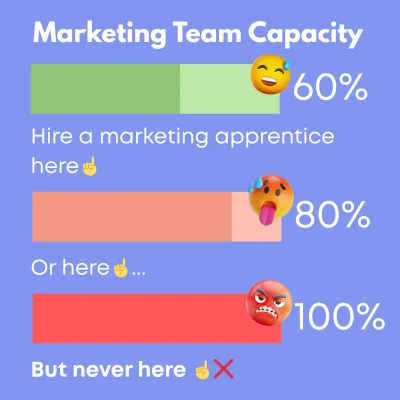
Hiring a marketing apprentice only works if you’ve got time to train them. Done right, they go from basic support to real output within months. Expect short-term effort, but long-term gains in capacity, cost efficiency, and team capability.

Hiring a junior marketer can be risky for SMEs. High applicant volumes, gaps between theory and execution, and limited training structures often create challenges. This article explores why and how structured development can reduce hiring risk.